How to get off the Drama Triangle
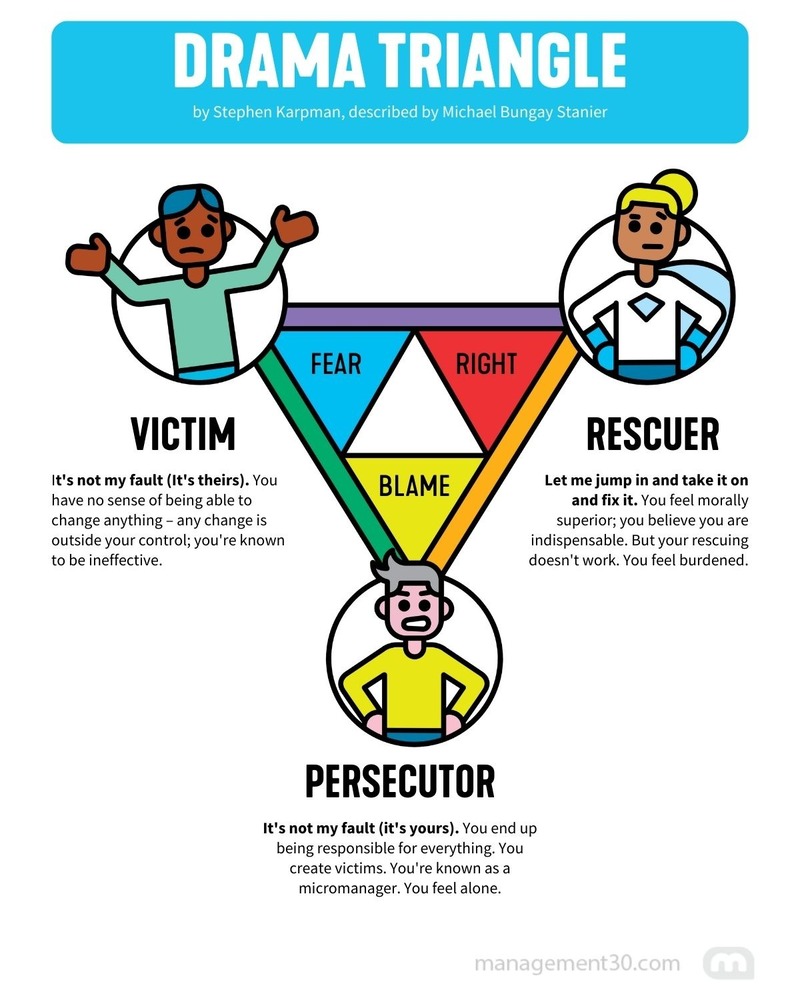
Stephen Karpman mapped the three roles people fall into during a conflict: Victim, Persecutor, Rescuer. The roles feed each other. A Persecutor needs a Victim, a Victim attracts a Rescuer, and a Rescuer who gets no gratitude turns into a Persecutor. Nobody solves anything, and everyone leaves tired.
David Emerald’s Empowerment Dynamic gives each role an exit: Creator, Challenger, Coach. Here is how I use it in the moment.
1. Pause
Tension spikes, your body goes to fight-or-flight, and you land on the triangle before you notice. Stop talking. Take a breath. The pause is the whole move. You cannot pick a role while you are already playing one.
2. Name your corner
Ask yourself which one you slipped into:
- Feeling helpless, or blaming circumstances? Victim.
- Attacking, criticizing, pointing fingers? Persecutor.
- Taking over, fixing it for them? Rescuer.
3. Swap the role
- Victim to Creator. What is one thing you control right now?
- Persecutor to Challenger. Drop the attack on the person. State the boundary or the request.
- Rescuer to Coach. Stop doing the work. Ask a question instead: “How do you plan to tackle this?”
Rescuer is the hardest one to leave. Helping feels good, and holding back feels like abandoning someone.
4. Re-engage
Say out loud what was happening, then aim at the problem rather than the person:
“I noticed we were going back and forth on whose fault it is. Can we reset and look at how to fix X together?”
Naming the pattern usually lands better than I expect. Most people know the loop they are in and are relieved someone stopped it.
Links
- Karpman drama triangle
- The Empowerment Dynamic
- Image above: Management 3.0